



Netcraft, s.r.o. · Bratislava
Build only what is needed.
We build and improve websites, e-commerce systems and the infrastructure around them — with particular attention to what they cost to run, how much of them is exposed, and how much technology is there for no reason.

Six ways in
E-commerce development
Shops, catalogues, checkout flows, payment and feed integrations, and the infrastructure behind them. We start by working out what actually needs replacing — improving the system you have is often the better answer.
Web development
Business websites and web applications built around what they need to do: a lightweight static site, a PHP application, or something integrated with systems you already run.
Website optimisation
What does the site cost to operate, and why? Hosting, CMS, licences, plugins, CDN, databases, analytics, third-party services — reviewed together, with the smallest useful set of changes recommended.
Security review & simplification
Exposed services, software, dependencies, access points and hosting architecture reviewed, then unnecessary attack surface removed before anything new is bought.
Infrastructure & tooling
The software, hosting and services a business already pays for, reviewed for where simpler or lower-cost tools do the same job reliably — and where paying is worth it.
AI & automation
Assistants and pipelines put into work you already do, with a human review step where being wrong would matter. Automation should remove a real step, not add one.
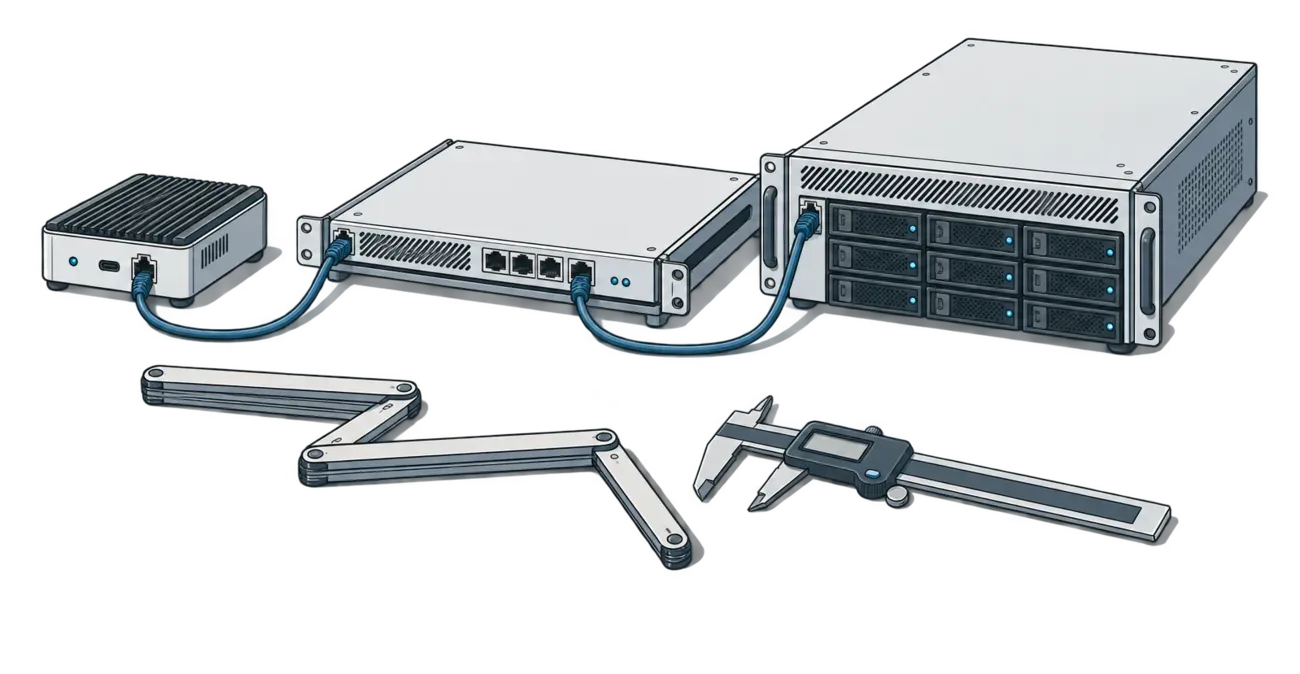
How we approach a system
We don't arrive with a preferred platform. We start with three questions: what does the system need to do, what does it cost to run now, and who has to maintain it afterwards.
That order matters. It is why the recommendation is sometimes a rebuild, sometimes a migration, and quite often switching a few things off and leaving the rest alone.
Right-sized, not minimal
Use as much technology as the problem requires — and no more. Sometimes the answer is a paid service, because paying removes real operational risk.
The smallest thing that does the job
Fewer moving parts is a smaller bill, a smaller attack surface and less to maintain.
Handover-ready
Another competent developer should be able to take it over. That is a design constraint, not an afterthought.
How an engagement runs
- 01
A conversation first
We want to understand the problem before quoting it, and to know whether we're the right people for it.
- 02
A fixed-fee review, then a plan with a number
Scope, sequence and price in writing. If the review finds that no change is warranted, the plan records that and the engagement ends with the review.
- 03
We build, you keep everything
Repository, content, domain and accounts stay yours. Nothing is locked to us.
Questions worth answering here
Do you replace what we have, or improve it?
Whichever is cheaper to live with. Rebuilds are sometimes right and often not — an existing system that works but costs too much to run is usually a better candidate for surgery than replacement.
Do you do small tasks or hourly work?
No. We work on defined projects with a plan and a price, where we can be responsible for the result.
Who owns the code?
You do, from the first commit. You get the repository and keep it whatever happens between us.
Do you sign NDAs?
Routinely, and before a first call if you'd prefer.
What if the review says we should do nothing?
Then it says that. You've paid a fixed fee for an answer, and that is a legitimate outcome — arguably the most valuable one.
Tell us what you're running now.
A URL, or a rough list of what you pay for each month, is enough to start.